

Hidden Level Ships "Power in the Sky" — and the Installed Base Just Got Smarter
Our Fund I portfolio company just deployed a next-generation RF detection capability that doesn't need a known emitter library. It shipped as a software update on existing hardware.
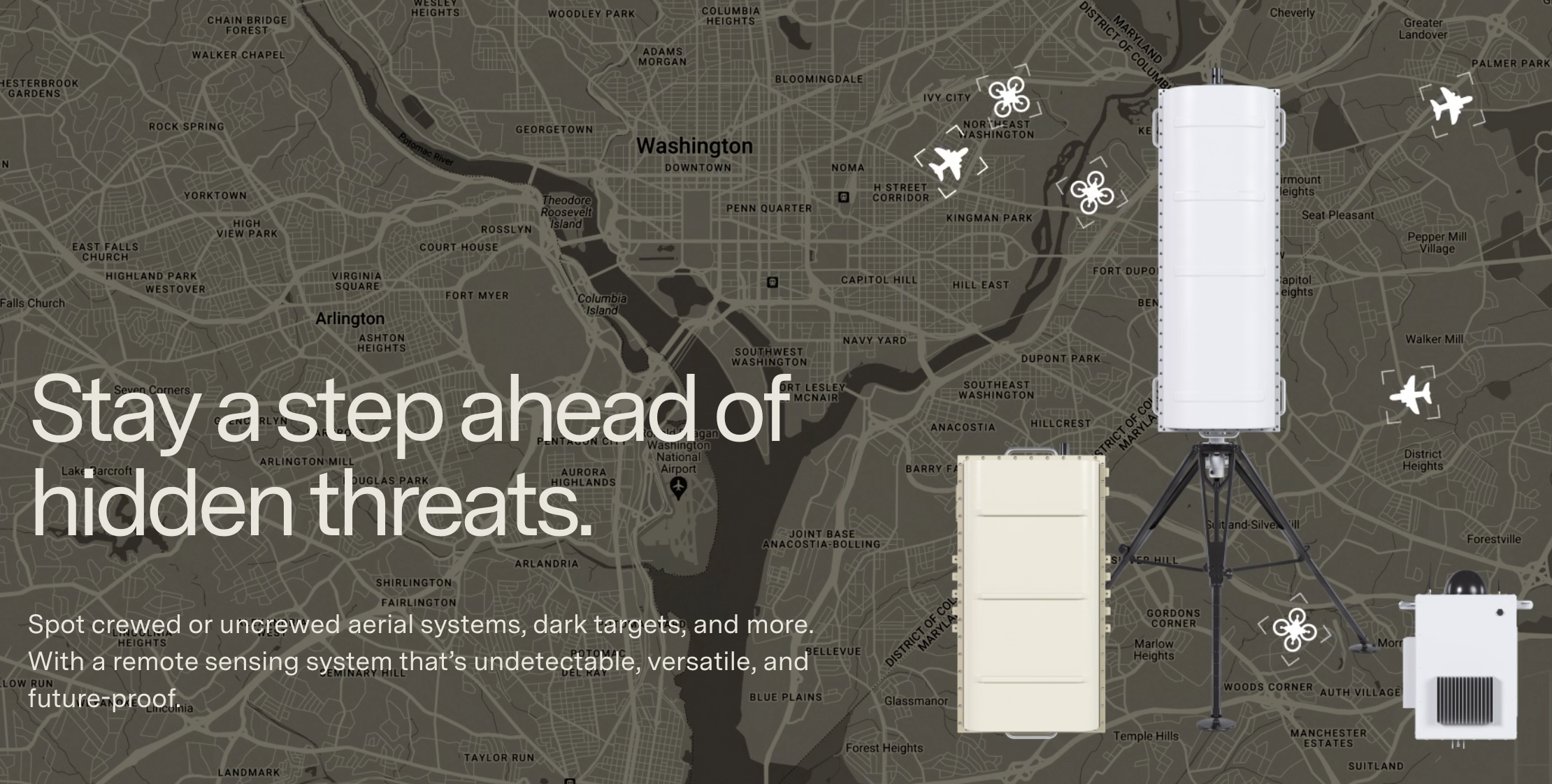
The Problem with Libraries
Most RF-based counter-UAS systems work by matching incoming signals against a library of known emitter signatures. If the system has seen the drone before, it can identify and track it. If it hasn't, it can't.
That was a workable model when the threat set was limited to a handful of commercial platforms. It is not a workable model today. Adversaries are modifying UAS platforms, building from scratch, and fielding novel configurations faster than any signature database can keep pace with. The library-dependent approach has a structural ceiling, and the threat environment has already pushed past it.
What Hidden Level Built
Hidden Level's new capability, "Power in the Sky," takes a fundamentally different approach. Rather than matching signals to a known catalog, the system continuously monitors the RF environment and converts previously unseen threats into actionable kinematic tracks — position, heading, speed, altitude — in real time. No prior signature required.
That distinction matters. It means operators are no longer blind to the threat that isn't in the database. The system addresses the entire spectrum of emerging, non-standard aerial threats across air, ground, and maritime environments, and it integrates directly with existing optics and command-and-control systems.
The investor signal worth noting: Power in the Sky shipped as a software update on existing Hidden Level hardware. No rip-and-replace. No new infrastructure. The installed base just got materially more capable overnight.
Why This Matters to Us
Hidden Level is a Fund I investment, and this release illustrates exactly the thesis we built that fund around.
When we evaluate sensing companies, we look for a specific architecture: purpose-built hardware with enough headroom that the real value compounds through software over time. Hidden Level calls it "mission-defined hardware," and Power in the Sky is a clean demonstration of the concept in practice. The hardware was designed from the start to evolve. Every deployed sensor becomes a platform for delivering new capability — without asking the customer to buy new equipment or rearchitect their deployment.
That's the compounding advantage of the model. Each software release makes the entire installed base more valuable. It deepens the relationship with the customer, raises switching costs, and accelerates the feedback loop between field data and product development. For a dual-use sensing company operating across defense, critical infrastructure, and public safety, that flywheel is the business.
The Broader Context
The counter-UAS market is large and getting larger, but it is also getting harder to win in. The threat is evolving quickly, the regulatory landscape is complex, and operators are rightly skeptical of systems that require constant manual updates to stay current. Hidden Level's approach — passive RF sensing that is manufacturer-agnostic, privacy-compliant, and now capable of detecting threats with no prior signature — positions the company on the right side of each of those dynamics.
Hidden Level is backed by a strong investor syndicate including DFJ Growth, Revolution Growth, Booz Allen Ventures, Lauder Partners, and Veteran Ventures Capital, and has raised over $120 million to date. The company is headquartered in Syracuse, New York, and its technology is designed, developed, and manufactured in the United States.
Congratulations to CEO Jeff Cole, COO Brad Garber, and the entire Hidden Level team on this release.
References:
